Most businesses know they need video. Fewer know what actually happens once they say yes.
If you have never commissioned a video before, the process can feel like a black box. You hand over a brief, money changes hands, and somewhere between that conversation and a finished film, a lot of things happen that nobody ever really explains.
This is that explanation. Plain, honest and without the jargon.
The video production process has three stages. Pre-production, which is everything that happens before a camera is switched on. Production, which is the shoot itself. And post-production, which is everything that happens after the shoot day until the finished film lands in your inbox. Get all three right and the result is something that works. Rush any one of them and the whole thing suffers.
Pre-production — where the real work begins
Most people think the shoot is where a video is made. It is not. The shoot is where a well-planned video is captured. The video itself is made in pre-production.
This is the stage where everything is figured out before anyone picks up a camera. What is the video for? Who is it aimed at? What do we want them to feel, think or do after watching it? What story are we telling and how are we going to tell it?
From those answers comes a script or a shot list, a storyboard if the production is complex enough to need one, a location scout, a call sheet, a kit list and a schedule. For bigger productions it also includes casting, wardrobe sourcing, prop building, permit applications, risk assessments and crew briefings.
Thorough pre-production is the thing that separates a smooth shoot from a chaotic one. Every hour spent planning saves three on the day. Every question answered before the shoot is one less problem to solve while the clock is running and the crew is standing around waiting.
At Creation DMC we treat pre-production as the most important part of the process. Before we have filmed a single frame we already know exactly what the finished video needs to look like and why.
Production — the shoot day
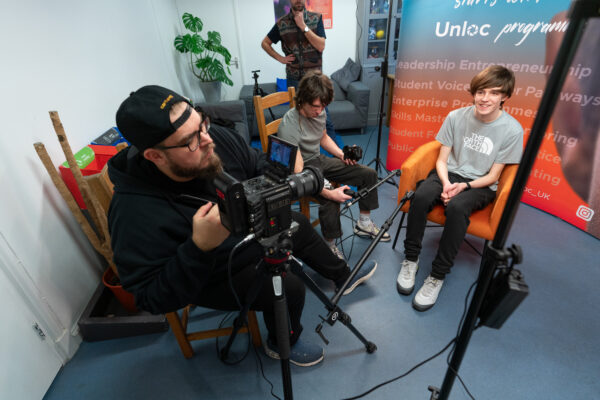
This is the part most people picture when they think about video production. The cameras, the lighting rigs, the crew, the director calling action.
What looks like controlled chaos from the outside is, on a well-run shoot, anything but. Every shot is planned. Every setup is efficient. Every creative decision is made in service of the edit that is already mapped out from pre-production.
Professional video production balances technical precision with creative direction simultaneously. The camera needs to be in the right place. The light needs to hit the subject in the right way. The audio needs to be clean and consistent. And the person or people in front of the lens need to feel comfortable, confident and natural enough to give you the footage you actually need.
That last part is where experience matters most. Equipment is equipment. A good camera operator can be hired by anyone. The thing that separates a great shoot from an average one is the ability to get the best out of the people and the environment in front of you, to read a room, adapt quickly and make every subject feel like they are having a conversation rather than performing for a camera.
We have directed shoots in Grade I Listed churches, working dental surgeries, live farm locations, corporate offices, professional studios and community centres across Hampshire and beyond. No two shoot days are the same. The preparation always is.
Post-production — where it all comes together
The shoot is done. The hard drives are full. Now the video gets made.
Post-production is the stage that most clients see the least of and underestimate the most. A full shoot day might generate hours of footage. The finished video might be ninety seconds long. Getting from one to the other involves a process that is equal parts technical skill and creative judgment.
The edit starts with logging and selecting the best footage, then building a rough cut that tells the story in the right order at the right pace. From there it is refined, tightened, scored with music, colour graded so every shot feels consistent and visually deliberate, mixed for audio so dialogue, music and any sound effects sit together cleanly, and finished with any motion graphics, titles or captions the video needs.
For social media cuts, the same footage is then reformatted for different platforms, different aspect ratios and different audience behaviours. A sixty second Instagram Reel cut from the same shoot as a three minute website film. Same footage, completely different edit, built for a completely different context.
Post-production is also where feedback and revisions happen. A professional production company will build a clear revision process into the project so that you can review the cut, request changes and sign off the final version with confidence.
How long does the video production process take?
For a standard corporate or promotional video, the full process from initial brief to finished film typically takes three to four weeks. That includes pre-production planning, the shoot day itself and post-production editing with two rounds of revisions built in.
More complex productions involving multiple locations, casting, special effects or large amounts of footage naturally take longer. Rush timelines are possible but they cost more and they put pressure on every stage of the process. The best videos are the ones given the time they deserve.
What should you have ready before you commission a video?
You do not need to have everything figured out. That is what the production company is for. But the clearer you can be on three things, the smoother the process will be.
Who is this video for? Not your business. Your audience. The specific person you want to watch it and what you want them to do afterwards.
Where will it live? Your website, your social media, a sales presentation, an award submission. The answer changes everything about how it is shot and edited.
What does success look like? More enquiries, more trust, a specific campaign result. Knowing what you are measuring means you can actually tell whether the video worked.
Everything else, the creative approach, the script, the locations, the crew, the edit, is the production company’s job. Yours is to be clear on the outcome you need.
Ready to start the process?
If you are a Hampshire business thinking about commissioning your first video, or your next one, we would love to hear about it. No obligation, no hard sell. Just a conversation about what you need and whether we are the right team to deliver it.
Find out more about our corporate video production service or book a free discovery call and let us take it from there.